Our Place in the Napa Flood Control Project
Reserve Online
With all the inaccurate information about the Wine Train that has been coming out, we thought we had better set the record straight on a few basic misconceptions.
Key Point
- The Napa Valley Wine Train did not receive $54 million of stimulus money from the Federal Government, and we are not receiving an unfair benefit from this money. The $54 million in question went to the Army Corps of Engineers to help complete Napa's decades long flood control project.
In Depth FAQ
Here are some of the most frequently asked questions that the Napa Valley Wine Train is receiving, and the items most commonly misunderstood regarding the Wine Train and the current phase of the Napa River - Napa Creek Flood Control Project.
- What is a right-of-way?
- Who owns the railroad tracks?
- Why did the Flood Project decide to include the tracks in the project vs. tearing them out?
- Should the Flood Project be finishing the Napa Creek Project before the current phase involving the Train tracks?
- Who uses the tracks and why?
- Would it be more cost effective to locate the Train further north?
- Does the Wine Train benefit from having its tracks elevated and moved?
- Does the Wine Train benefit from the new bridge over the bypass?
- Does the Wine Train benefit from the flood wall around its building?
- Does the Wine Train benefit from having its current trestle replaced?
- What does the Wine Train bring to the community?
- What happens if the Transportation Corridor is lost?
- What would be the implications/ramifications of the Wine Train going out of business?
- Why was the this phase of the Flood Project a single-source contract?
What is a right-of-way?
Generally speaking, "Right of way (1)" refers to the land on which infrastructure is built. This can be anything from a highway to an airport. Pipelines, power lines, and telephone and cable all require right of way. In the United States, railroad rights-of-way are considered private property by the respective railroad owners and by applicable state laws. The railroad owns title to land upon which they build permanent tracks.
Railroad rights-of-way need not be exclusively for railroad tracks and related equipment. Easements are frequently given to permit the laying of communication cables (such as optical fiber) or natural gas pipelines, or to run electric power transmission lines overhead.
A right of way is established for a common public good. It is the land that allows people to move freely between cities and towns, to have access to utilities and other services. Right of ways provide great value to a community.
Who owns the railroad tracks?
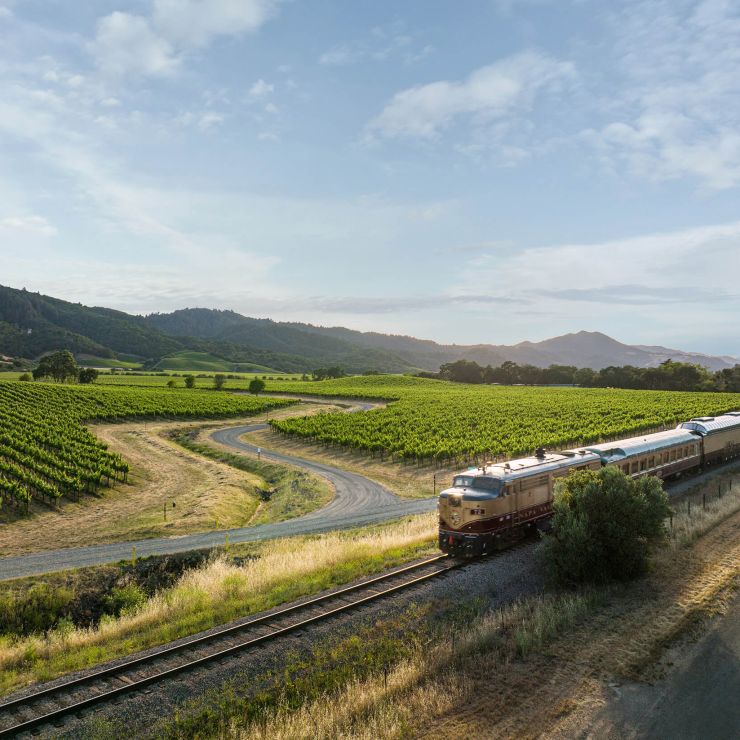
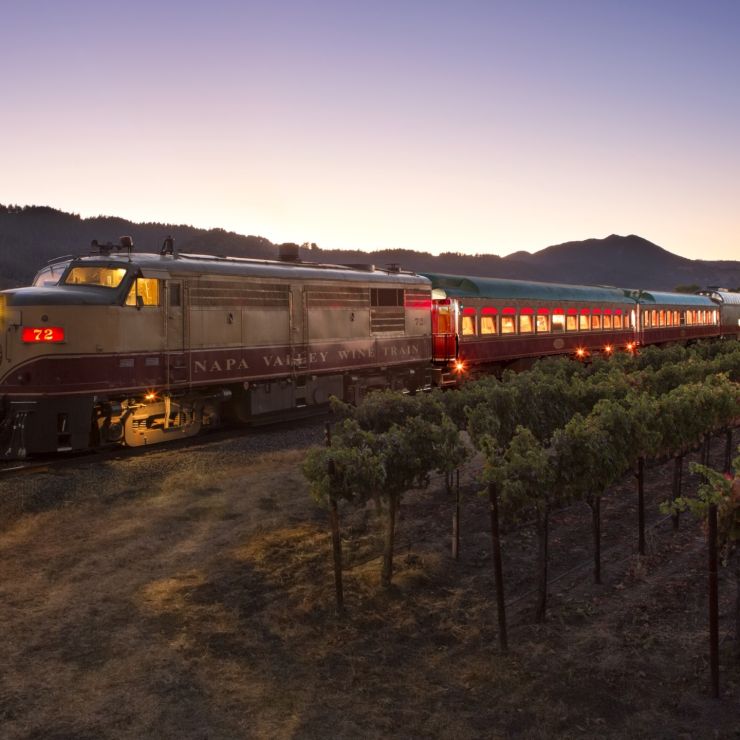
Napa Valley Wine Train (NVWT), a "short line" railroad owns 23.26 miles of track that run from Streblow Avenue in South Napa to where the tracks end at Deer Park Road north of St. Helena.
Why did the Flood Project decide to include the tracks in the project vs. tearing them out?
The NVWT is classified as an Interstate Railroad, and as such is governed by the Surface Transportation Board (STB). In 2001, the Napa Valley Flood Control and Water Conservation District petitioned the STB for adverse abandonment of the NVWT tracks. A settlement was reached when the District and the NVWT agreed to realign the tracks for the Flood Control Project. This adjudication legally confirms the NVWT's status as an Interstate Railroad and its oversight by the Federal Railroad Authority.
With this settlement, the Flood Control Project was required to move the tracks.
Should the Flood Project be finishing the Napa Creek project before the current phase involving the Train tracks?
All flood protection projects are constructed starting at the downstream end and working upstream. If you change water flows upstream first, flooding will be made worse for people downstream. However, after the 12-31-05 flood, the Corps of Engineers has said they believe the improvements on the Napa River that have been built downstream of Third Street make it feasible for improvements on Napa Creek to proceed at any time. Due to the federal Stimulus funding in 2009, the work on Napa Creek is expected to being in 2010, once the engineering studies for the creek improvements have been completed (2).
Who uses the tracks and why?
The Napa Valley Wine Train and the Napa Valley Railroad uses the tracks. The NVWT also host Amtrak, and its clients when they make stops in Napa Valley.
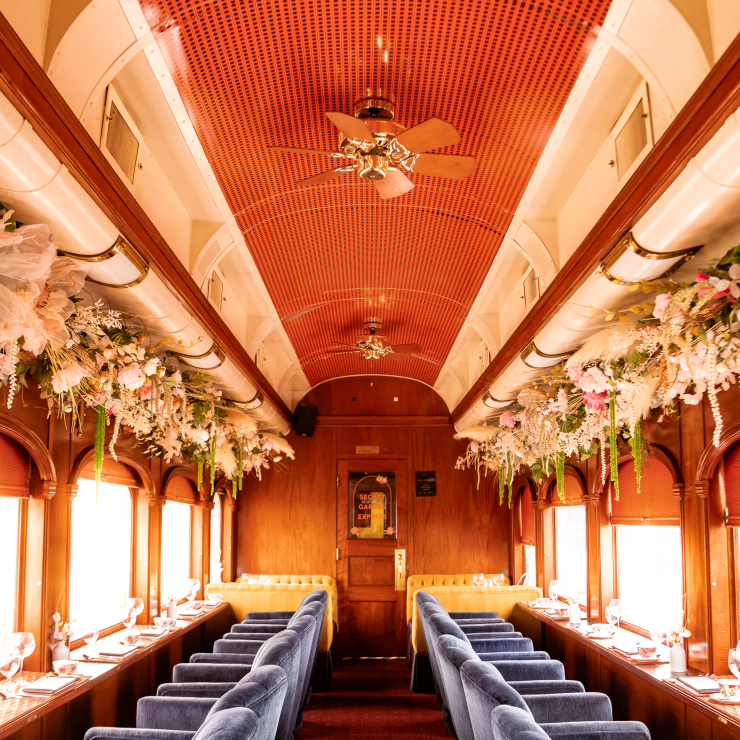
The Napa Valley Wine Train operates the well known gourmet dinner and lunch trains; as well as freight service and limited passenger service to Napa Valley locations. In addition to passenger service to Yountville from Napa, the Wine Train recently made local history when it provided transportation to an ongoing St. Helena City wine event.
Conversations have been ongoing with many entities to increase the passenger service, and car-free opportunities for the Napa Valley. Preliminary discussions are underway on a passenger link for the Napa Pipe Project. The NVWT already provides a daily (seasonal) round-trip link from the NVWT depot to the Vallejo Ferry. Additionally, the NVWT has worked with several businesses and non-profits to provide transportation to their Up Valley events.
Would it be more cost effective to locate the Train farther north?
It would not be more cost effective to move the Train depot farther north. The main reason is that it would not only entail the movement of the depot, but also the rail yard.
The depot, with its customer facing look and large visitor traffic is an asset to most business hubs. The rail yard, however is industrial and finding a parcel of suitable size and zoning would be difficult to unlikely. The real set back to moving the train more north and out of the flood plain is that once that is accomplished the transportation and freight link to the south is severed.
Severing that link not only disables the transportation corridor, but impacts the Wine Train's ability to maintain its own tracks and equipment. The Train would no longer be able to service its current or future freight customers, or take delivery of railroad equipment (cars and parts) and ballast via rail. Any deliveries of rail equipment still possible would have to be accomplished using large trucks -- adding more industrial traffic to an already congested infrastructure.
Does the Wine Train benefit from having its tracks elevated and moved?
The Flood Project requires that railroad tracks be relocated from the South Soscol Avenue crossing to Napa Street to accommodate the increased elevation at the bridges. The new alignment will be approximately 35-feet east of the existing track.(4)
Are these new tracks beneficial to the Napa Valley Wine Train? In this case, there is no net benefit to the Train; but there are negative impacts. Train tracks can be prohibitively expensive to replace if they are allowed to descend into disrepair. Tracks that are well-maintained (such as NVWT) do not require replacement. There is no net benefit to the Wine Train for a short section of recycled tracks. Unfortunately, the NVWT does have operational issues with both having to work around the track replacement and the new tracks themselves.
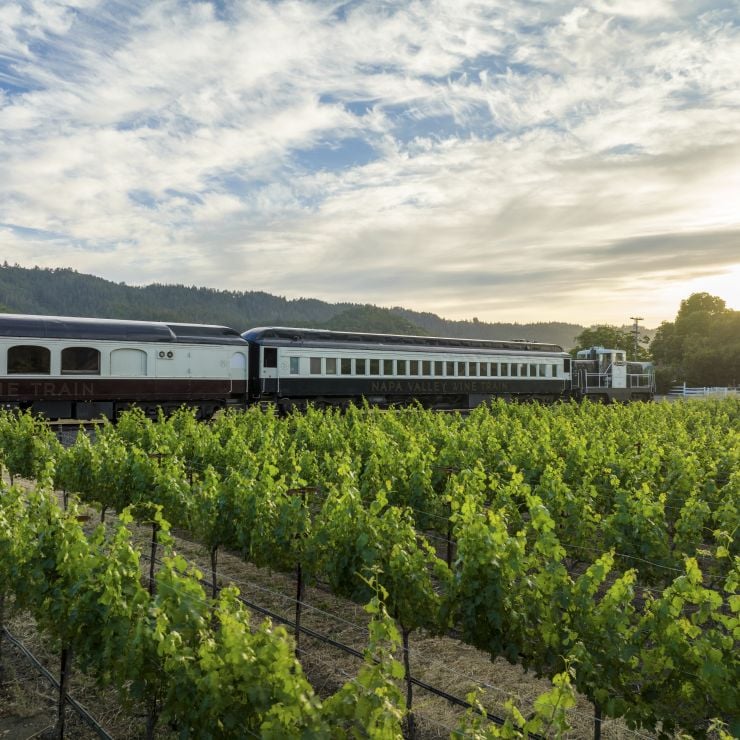
The NVWT rail yard is less than a mile from the station, and there is currently no significant grade change between the two stops. Changing the grade of the tracks into the station and raising them has put a burden on the historic locomotives that will now have to go from a standstill to up a hill. The Wine Train engines pull nine cars each weighing about 80 tons. It takes considerably more energy to get up that little hill than what is currently expended, and the change in the track curvature impacts the wear on the Train's wheels. In fact, the NVWT had to move the Train onto other tracks in the rail yard and flip the entire Train 180 degrees in order to lessen the impact of the new, higher tracks and tighter curvature. This change creates a situation of increased operating costs for the Train.
Does the Wine Train benefit from the new bridge over the bypass?
As part of the Flood Project improvements, a Bypass Channel is being constructed at the Oxbow. This river shortcut will help to relieve pressure around the Oxbow by diverting high water during large storm events from east of McKinstry Street back into the river near the mouth of Napa Creek. A new rail bridge is required to carry the train across the future Oxbow Bypass Channel, which is essentially an opened channel, before the bypass construction can begin. (4)
So, it sounds like the Wine Train gets a new bridge which is a benefit, yes? Well, no. First, the Train will not own the bridge. It will have the right to use the bridge, but does not own the bridge structure itself. Is a bridge a benefit over what was existing (excluding the flood protection benefits)? No, a bridge is not a better roadbed than the ground. A bridge requires maintenance, and contains inherent pedestrian risks.
Does the Wine Train benefit from the flood wall around its building?
The flood wall around the NVWT building has been perceived as a benefit by some individuals. They see the government spending money to protect, or enhance, a private property owner.
When the government changes the conditions around a property owner's building or other assets, the government is not allowed to increase peril to that property. The flood wall is a mitigation against the increased threat of flooding that is a result of the bypass construction.
The Army Corps of Engineers conducted a hydrology study that showed when the tracks are raised 5 feet next to the station and prior to the bypass channel being completed the Wine Train station would have an increased risk of flooding. The Corps was required by law to build the flood wall to protect the Wine Train station.
This is not an architectural enhancement. Esthetically, the wall is no benefit. This does not improve the integrity of the building. Structurally, the wall is no benefit. The wall is a barricade against possible flooding. During its construction, the Wine Train has lost the benefit of a large piece of parking; and it has disrupted the business of a Wine Train community partner -- the local Farmer's Market has had to find a new location during the construction of the flood wall.
Does the Wine Train benefit from having its current trestle (bridge) replaced?
The existing railroad bridge over the Napa River impedes high water in a flood event; consequently, the bridge must be replaced with one at a higher elevation. The plan is to build a new rail bridge over the Napa River four feet higher and 35 feet to the east of the existing bridge. This will eliminate the railroad as a flood obstruction. Under a future contract, the Flood Project will construct floodwalls along the Oxbow that will tie into the new bridge. This bridge is one of nine bridges in the community that have been raised. (4)
It is unlikely that the NVWT would be replacing the current trestle anytime soon. However, a new trestle to replace the current trestle is a capital improvement to the Wine Train. This did not come free. The NVWT deeded over property and river access to the Flood District to help offset the construction costs on the bridge. The Flood Control Project has been very assertive in its negotiations to ensure that no private property owners have been unduly compensated by the Project.
What does the Wine Train bring to the community?
More than 1,000 people have found a job with the Napa Valley Wine Train over the past 20 years. During the time that the NVWT has been in business it has contributed more than $160 million back to the community in the form of taxes, wages, and services. The Wine Train currently sources their products locally, and responsibly. For some of the Train's artisan vendors, the Wine Train is their largest account. Serving an average of 100,000 guests a year, the Wine Train is one of the community's largest restaurants.
For 20 years, the Wine Train has paid full time employees (25+ hours a week) health benefits, with no contribution from the employee. Most of the 100 to 150 annual employees receive this benefit (they average 100 full-time employees a year). The NVWT donates more than $100,000 a year to local and regional non-profits and to Boys and Girls Clubs across the United States. Additionally, the Wine Train launched a highly popular program that gives Train tickets to local volunteers, and it encourages -- and supports -- volunteerism with its employees.
The NVWT is a high-profile, high energy Napa Valley business that has international brand recognition. A considerable portion of the visitor traffic to the Napa Valley either came to the Valley for the purpose of riding the Wine Train, or enjoyed the services of the Train after they arrived. The Wine Train was named North America's top Tourism Restaurant for 2010 by the Great Wine Capitals.
The Wine Train is a leader in the local car-free movement. They were the first and only Train in the United States to convert their locomotives to Compressed Natural Gas (CNG), resulting in a clean energy vehicle. The Wine Train has been recognized by the State of California and local governments for its significant waste stream reduction. They have been lead supporters in innovative recycling programs, such as reCork America.
During these recessionary times, the Wine Train has created unique partnerships with other community members to increase tourism, and raise the profile of the Napa Valley. These programs have been highly successful. Wine Train staff also attends national and international forums aimed at promoting responsible travel, and encouraging trade with the state and Valley businesses.
What happens if the Transportation Corridor is lost?
A lost Transportation Corridor is a lost opportunity for a community. Once a rail line is abandoned, the re-establishment is lengthy and costly. Many times, prohibitively so.
What opportunities does an alternative transportation corridor, like rail, provide? Clearly, reduced delivery truck and automobile traffic on vital roadways. They can offer a cleaner alternative to automobiles with light-rail or other innovative vehicles. They are alternatives to cars when gas costs rise. And, particularly important to the Napa community -- they are designated drivers and car-free touring options. On average, a rail system carries 2.2 passengers to the average of 1 in a car.
With only two major arteries up and down the Napa Valley, the loss of this third line would require any growth be in the size of the two arteries. Both Silverado Trail and Highway 29 are currently only two lanes in most places. Congestion or increased capacity would call for the development of more lanes of traffic, regardless of whether this growth is from within the county from neighboring high-density communities.
What would be the implications/ramifications of the Wine Train going out of business?
The NVWT doesn't know what the future will bring, but the destruction of a viable transportation corridor limits the vision of that future.
While not one of Napa County's top 10 employers, the NVWT is still a major employer in the community. Napa County, like most around the Nation, is struggling to keep jobs. The loss of 150 jobs with benefits would be significant by itself. If you add the ripple effects of removing the revenues from the community, the loss would be significant and its impact felt across many sectors.
The Train is one of the largest voices talking about Napa Valley, promoting the Napa Valley, and educating people about Napa Valley. If this voice is silenced, Napa Valley will lose one of its largest champions.
In addition to online advertising on popular travel sites across the Web, winetrain.com garners almost three-quarters of a million visitors a year. The Train's marketing budget has significantly outpaced that of the County's destination organization every year it has been in service.
The Wine Train hosts people who are celebrating a new direction in their life, celebrating their anniversaries, their birthdays, their friendships, and sometimes their family losses. The Train is a draw to history buffs and those that love antique rail travel and the life it used to represent. There are not many places left in the United States where you can actually use these beautiful cars.
The Napa Valley Wine Train is an ambassador of the Napa Valley.
Why was this phase of the Flood Project a sole-source contract?
The entire Flood Control Project enjoyed the benefit of continued contract funding which is on a set schedule. Due to engineering and other factors delaying the project, the current phase of the project was unable to utilize the competitive bid process. The window for the competitive bidding had passed which required the USACE into a sole-source process. Had the single-source process not been employed, the Project would have missed construction and funding deadlines. That missed opportunity would have put the entire Flood Project's completion in jeopardy -- including the residential work on Napa Creek. (2)
According to NapaFloodControl.com: "This was not a no-bid contract. Suulutaaq responded to the Army Corp of Engineers Request for Proposal (RFP) (over 1000 pages) with a proposal for completing the project. That proposal was submitted in accordance with the Department of Defense Regulations that established allowable costs, profit ceilings and audit requirements. Following the Federal Laws that govern its contracts, the Army Corp of Engineers conducted an independent cost analysis that concluded Suulutaaq’s proposal was both fair and reasonable. After confirmation of the cost analysis and the mandatory audit requirements, the Army Corp of Engineers entered into final negotiations with Suulutaaq to set a firm fixed price and then awarded the contract in September 2008." (4)
The Army Corps of Engineers defines a Sole Source contract as: "5.4.1 8 (a) Sole Source Contract - 8(a) contractors may be selected for a construction contract without competition in coordination with the District SADBU (Small and Disadvantaged Business Labor Advisor). The Request for Proposal (RFP, i.e. solicitation) is requested by Project Management (PM) to Contracting Division (CT). CT issues the solicitation to the contractor and receives the official proposal. The Request for Proposal includes a bid schedule, Davis Bacon Wage Rates, liquidated damages, quality control requirements, and other contract clauses. The Resident Office that will be responsible for the administration of the contract usually negotiates the contract. . . . "(5)
Footnotes:
(1) As the Supreme Court noted in Joy v. City of St. Louis,47 "It sometimes is used to describe a right belonging to a party, a right of passage over any tract; and it is also used to describe that strip of land which railroad companies take upon which to construct their road-bed."
(2) As understood by NVWT CEO Gregory McManus
(3) County of Napa - http://www.countyofnapa.org/Pages/DepartmentNews.aspx?id=4294968654
(4) NapaFloodControl.com - http://napafloodcontrol.com/faq.html#ques5
(5) U.S. Army Corps of Engineers - http://www.sam.usace.army.mil/cd/dm1110-1-1/samcd5sec4.doc
Information sources:
http://www.napafloodcontrol.com
http://www.countyofnapa.org/FloodDistrict/
http://www.countyofnapa.org/Pages/DepartmentContent.aspx?id=4294968678
http://www.stb.dot.gov/